
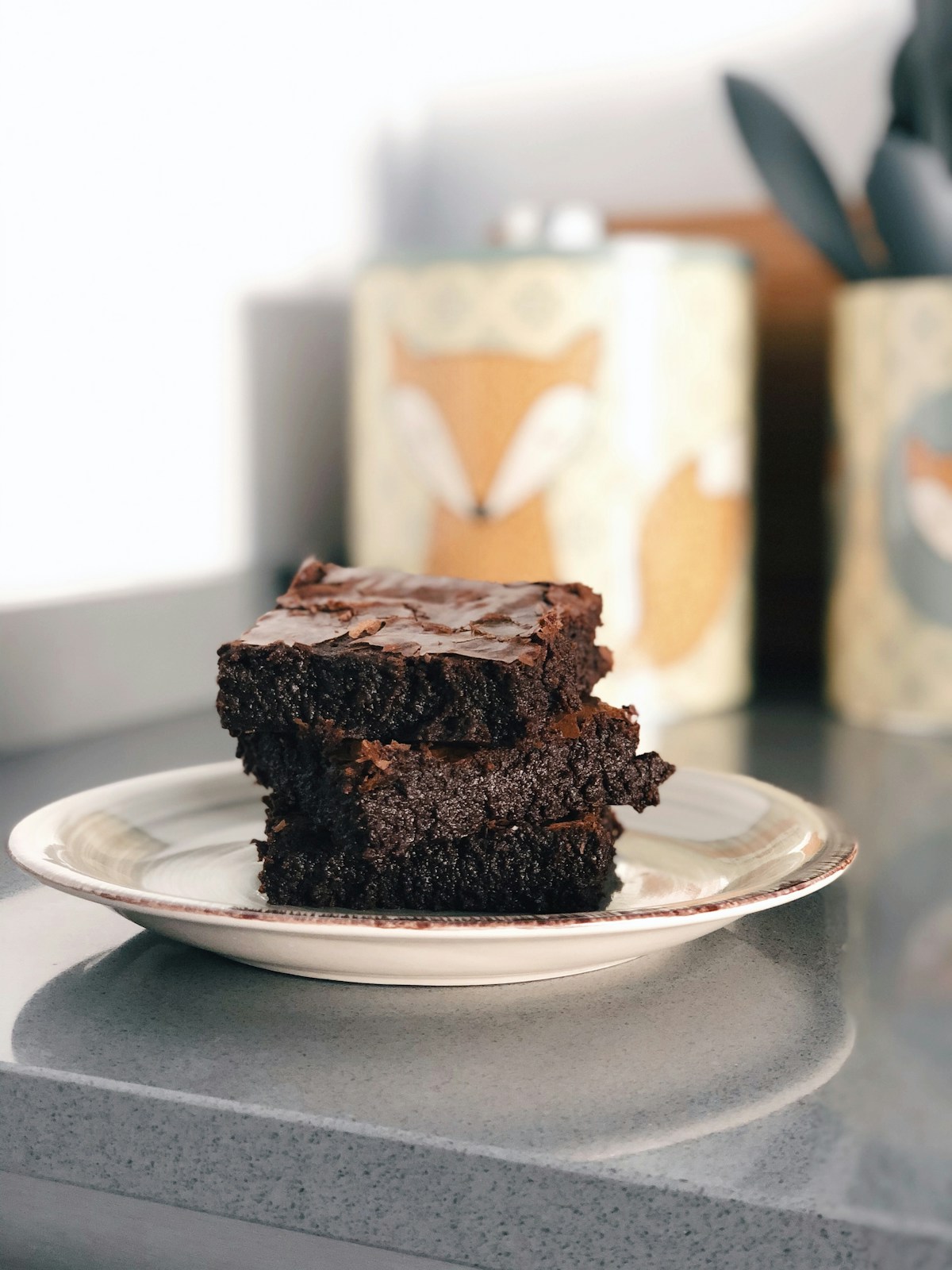
Photo: Arantxa Aniorte / Unsplash. Serving suggestion; presentation may vary.
These dark chocolate brownies are rich, compact and easy to portion. A modest amount of flour keeps the middle soft, while cocoa deepens the chocolate flavour. Allow enough cooling time: warm brownies are fragile even when correctly baked.
Fudgy Dark Chocolate Brownies
Ingredients
- 150 g unsalted butter
- 180 g dark chocolate, 60–70% cocoa, chopped
- 200 g caster / superfine sugar
- 3 large eggs
- 1 teaspoon vanilla extract
- 90 g plain / all-purpose flour
- 25 g unsweetened cocoa powder
- 1/4 teaspoon fine salt
Preparation
- Heat the oven to 175°C conventional / 155°C fan. Line a 20 cm square metal tin with baking paper, leaving an overhang.
- Melt butter and chocolate in a heatproof bowl over barely simmering water, keeping the bowl above the water. Stir smooth and leave for 5 minutes.
- Whisk sugar, eggs and vanilla by hand for about 1 minute. Stir in the warm, not hot, chocolate mixture.
- Sift in flour, cocoa and salt. Fold gently until no dry patches remain. Scrape into the tin and level.
- Bake for 25–30 minutes. The edges should be set and a skewer from the centre should carry moist crumbs, not liquid batter. Cool in the tin for at least 1 hour before lifting out and cutting into 16 squares.
Practical tips
A metal tin gives more predictable results than thick glass. Begin checking early because a few extra minutes can turn a soft centre dry. Glossy melted chocolate should be warm enough to flow but never hot enough to scramble the eggs. Avoid vigorous mixing after adding flour. Use ordinary unsweetened cocoa, not a sweetened drinking chocolate blend.
Storage and make-ahead
Cool completely and keep airtight in a cool room for up to 3 days, or refrigerate for up to 5 days. Freeze wrapped squares for up to 2 months. Thaw covered at room temperature. Refrigerated brownies have a firmer texture; let them stand briefly before serving.
How to tell when brownies are done
Look for set edges and a surface that no longer appears liquid. A skewer near the centre should emerge with moist crumbs rather than raw batter. A clean skewer may mean the brownies are overbaked for a fudgy texture. Begin checking a few minutes early because ovens and baking tins vary.
Getting neat brownie squares
Let the slab cool fully in the tin before lifting it out by the parchment. For tidy portions, chill briefly and wipe a sharp knife between cuts. Warm brownies often crumble even when correctly baked.
Common brownie mistakes
Overmixing after adding flour can make the texture tough. Stir just until the flour disappears. Weigh the flour for consistency, and use the tin size specified in the recipe: a larger tin produces thinner brownies that bake faster. If the edges brown before the centre sets, check your oven temperature.
Serving variations
Try fresh raspberries, strawberries or a spoonful of plain yogurt to contrast with rich chocolate. Chopped nuts can be folded into the batter, but remember to disclose nut allergens when serving guests.
Ingredient choices that affect the result
Choose a dark chocolate you enjoy eating, because its flavour remains noticeable after baking. Chocolate with a higher cocoa percentage tends to taste less sweet, while a sweeter bar produces a milder result. Check whether your chocolate is intended for baking or contains added fillings, which may melt unpredictably. Use unsalted butter if possible so you can control the seasoning. Eggs at room temperature mix more easily into melted chocolate that has cooled slightly. If the eggs are cold, the chocolate mixture can firm up in small lumps; this usually improves with gentle mixing, but overheating the mixture to fix it risks cooking the eggs.
Preparing the tin and oven
Line the base and sides of the baking tin with parchment, leaving two strips extending above the rim to help lift the finished slab. Smooth the paper into the corners so the batter reaches an even depth. Preheat the oven fully before mixing the batter. An oven thermometer is helpful when your oven runs hot or cool. Put the tin on the middle shelf, where the heat is usually more even, and avoid opening the door repeatedly during the first part of baking. If the top colours too quickly, check the oven setting before changing the recipe.
Questions about brownie texture
Why are the brownies cakey? Too much flour, extra mixing or baking too long can make the crumb lighter and drier. Measure carefully and check the centre early. Why do they sink? A small amount of settling is normal as a soft centre cools; a wet, raw centre indicates they need longer. Can I double the batch? Use a larger tin that preserves approximately the same batter depth rather than pouring a double batch into the original tin. Start checking at the recipe’s usual time and allow extra time if needed.
Planning a dessert platter
Brownies are convenient for gatherings because they can be baked the day before and cut after cooling. Keep toppings separate until serving so fruit does not release moisture onto the surface. Arrange smaller squares with fresh berries and offer plain yogurt on the side. Label any nut additions clearly. For transport, place parchment between layers and keep the container away from direct sun or heat. When freezing, wrap individual portions so you can thaw only what you need.
Serving and allergens
Serve small squares with plain yogurt or fresh berries. For a fruit-based bake, try our easy banana bread. Contains wheat, eggs and milk; check chocolate labels for other allergens.
More from our kitchen: easy banana bread ripe bananas.