
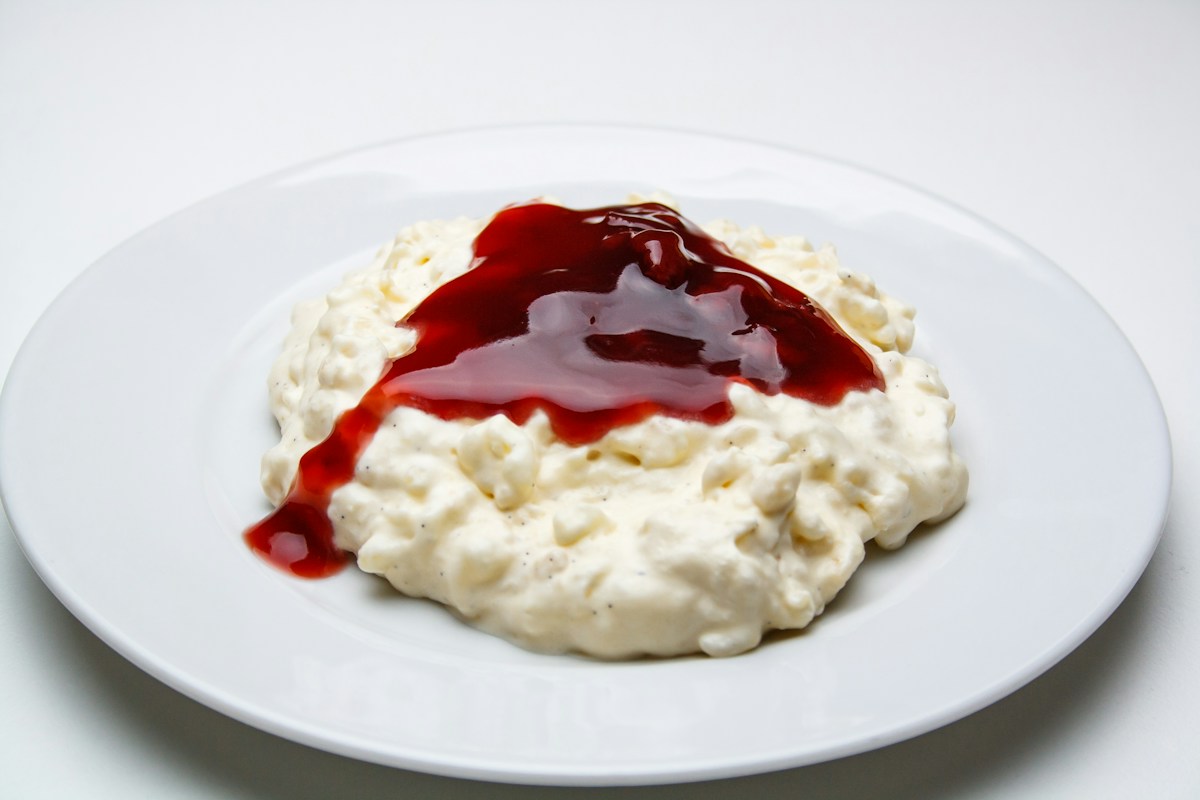
Vanilla rice pudding is a quiet, comforting dessert made from ordinary cupboard ingredients. Short-grain rice releases enough starch to thicken the milk without eggs or cornflour. Gentle heat and occasional stirring at the beginning, followed by closer attention near the end, keep the texture creamy.
Photo by Rasmus Gundorff Sæderup / Unsplash. Serving suggestion. Presentation may vary.
TOPSIMPLE RECIPES · RECIPE CARD
Creamy Vanilla Rice Pudding with Cinnamon
Ingredients
- 100 g short-grain pudding rice or arborio rice
- 800 ml whole milk
- 150 ml water
- 50 g caster sugar
- 1 teaspoon vanilla extract
- 1/8 teaspoon fine salt
- 1/2 teaspoon ground cinnamon, for serving
- 150 g pitted frozen cherries, optional cherry topping
- 20 g caster sugar, optional cherry topping
- 20 ml water, optional cherry topping
Preparation
- Place rice, milk, water and salt in a heavy-based saucepan of at least 2 litres. Bring slowly to a gentle simmer over medium heat, stirring so rice does not stick.
- Reduce the heat to low. Simmer uncovered for 30–35 minutes, stirring every few minutes and more frequently as it thickens. Keep the milk moving gently rather than boiling vigorously.
- Taste a grain of rice. Once it is tender throughout, stir in sugar and vanilla. Cook for another 3–5 minutes until creamy but still loose enough to fall from a spoon. If rice is firm, continue gently and add a splash of hot water as needed.
- Remove from the heat and rest for 10 minutes. It will thicken as it stands. Divide into four bowls and dust with cinnamon. Serve warm or follow the rapid-cooling advice below for chilled portions.
- For the optional topping, simmer cherries, 20 g sugar and 20 ml water in a small saucepan for 8–10 minutes while the rice cooks, until the cherries soften and release a spoonable sauce. Spoon over the portions at serving.
Which rice works best
Pudding rice and arborio both have the starch needed for a creamy texture. Long-grain rice remains more separate and gives a different result. Use uncooked rice for these quantities. Leftover cooked rice absorbs liquid differently and needs its own method. Do not rinse away the surface starch unless the packaging specifically calls for rinsing, since that starch contributes to the final consistency.
Controlling the heat
Choose a heavy-based saucepan to reduce scorching. Milk can catch at the bottom while the top looks perfectly calm. Stir across the base and into the corners with a silicone spatula or wooden spoon. If a skin begins forming around the edges, stir it back in gently. A hard boil makes the liquid evaporate too quickly and can leave the rice undercooked in a dry mixture.
Finding the right consistency
Stop cooking while the pudding is slightly looser than you want to serve it. The rice continues absorbing liquid during the rest and again in the fridge. Add sugar after the grains are tender, then finish cooking briefly. Different rice brands and pan widths change evaporation, so rely on a tender grain and a creamy flow rather than an exact final minute.
Serving ideas and allergens
Cinnamon gives a warm finish without hiding the vanilla. Serve in small bowls as a dessert, or pair with fresh fruit at the table. This version contains milk. Check vanilla and cinnamon packaging if catering for allergies. The flavour is deliberately simple, making it a useful contrast to a richer cake or pastry. The optional cherry topping can be prepared while the pudding simmers. The photograph shows a rice pudding serving suggestion with cherry sauce.
Cooling and storage
If serving cold, divide into shallow containers promptly and cool quickly. Refrigerate as soon as possible, ideally within 1 hour, and use within 24 hours. Keep the fridge at 4°C or below. Reheat only once until steaming hot throughout, stirring in a little milk to loosen it. Do not leave rice pudding cooling slowly in a deep saucepan.
Frequently asked questions
If the pudding is too thick after chilling, stir in milk a little at a time. If it is thin while the rice is already tender, cook gently for a few more minutes while stirring. A brown layer at the base means the heat was too high. Transfer the unburnt pudding to a clean pan without scraping up the scorched layer. Freezing is possible, but the texture tends to separate, so fresh preparation gives a smoother result.
Explore another recipe from our kitchen. easy apple crumble oats cinnamon.