
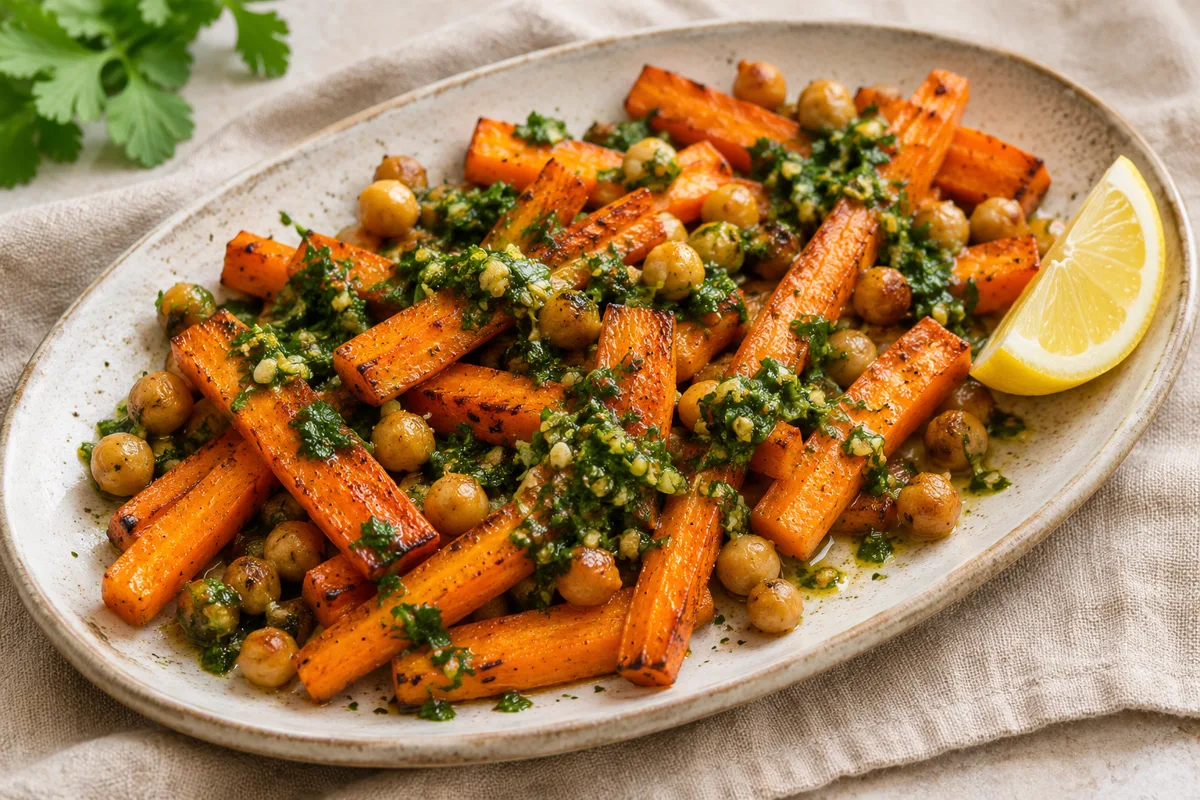
Serving illustration; presentation may vary.
Carrots become sweeter and more concentrated in the oven, while chickpeas add a contrasting bite. A chopped herb chermoula brings lemon, garlic and cumin to the warm vegetables just before serving. The combination makes a generous side dish or a straightforward plant-based lunch with bread and a small salad.
This recipe keeps the roasted ingredients and the herb sauce separate until the end. That gives the carrots time to colour without burning the fresh herbs and keeps the finished sauce bright. It also makes preparation more flexible: roast the tray while you chop the sauce, then dress only the amount you plan to serve immediately.
Chermoula varies between cooks and regions. This home-style version uses parsley, coriander, lemon juice, garlic and ground spices, with enough olive oil to make a spoonable sauce. It is intended as a fresh finishing mixture, not a claim that one exact formula represents every North African kitchen. You can change its intensity with small adjustments after tasting.
Chermoula Roasted Carrots and Chickpeas
Recipe at a glance
Serves 4 as a side or 2–3 as a light main. Preparation: 20 minutes. Cooking: 35–40 minutes. Total: 55–60 minutes. Difficulty: easy. Equipment: a large rimmed baking tray, clean kitchen towel, small mixing bowl and sharp knife. Use two trays if the ingredients cannot fit without crowding.
Ingredients
For the roasting tray
- 700 g carrots, about 1 1/2 lb, peeled or scrubbed
- 1 can chickpeas, 400 g/14 oz, drained and rinsed; approximately 240 g drained
- 2 tablespoons olive oil
- 1/2 teaspoon ground cumin
- 1/2 teaspoon sweet paprika
- 1/2 teaspoon fine salt
- 1/4 teaspoon ground black pepper
For the chermoula
- 20 g fresh flat-leaf parsley, leaves and tender stems
- 20 g fresh coriander, leaves and tender stems
- 1 small garlic clove, finely grated
- 2 tablespoons fresh lemon juice
- 3 tablespoons extra-virgin olive oil
- 1 teaspoon ground cumin
- 1/2 teaspoon sweet paprika
- 1/4 teaspoon fine salt, then adjust to taste
- 1–2 teaspoons water if needed
- A small pinch of chilli flakes, optional
- Lemon wedges for serving, optional
Weigh herbs loosely after removing coarse stems. A few tender stems contribute flavour and do not need to be discarded, but woody pieces make the sauce fibrous. If the coriander flavour is not welcome, replace it with additional parsley. That produces a different but useful parsley-led sauce without changing the roasting method.
Step-by-step method
- Heat the oven to 220°C/425°F conventional, or 200°C fan. Put a rack in the middle. Prepare a large tray; line it with temperature-appropriate parchment if desired, leaving enough exposed room that vegetables can sit in a single layer.
- Cut the carrots into batons approximately 6–7 cm long and 1.5 cm thick. Halve thin carrots lengthways and quarter thicker ones as necessary. Consistent thickness matters more than perfectly matching lengths because the thickest pieces determine cooking time.
- Drain the rinsed chickpeas and dry them thoroughly on a clean towel. Pat gently rather than crushing them. Remove loose skins if they come away easily, but there is no need to peel each chickpea individually.
- Toss carrots with 1 1/2 tablespoons of the roasting oil, the cumin, paprika, salt and pepper. Spread them on the tray with cut sides against the metal where possible. Roast for 15 minutes to give the denser carrots a head start.
- Toss the chickpeas with the remaining 1/2 tablespoon oil. Turn the carrots, add the chickpeas around them, and return to the oven for 20–25 minutes. Stir once after about 12 minutes. Finish when the carrots are tender through their centres and browned at the edges, and the chickpeas have some golden patches.
- While the tray cooks, finely chop the parsley and coriander. Combine them in a bowl with garlic, lemon juice, olive oil, cumin, paprika, salt and optional chilli. Stir thoroughly. Add a teaspoon or two of water only if the sauce is too thick to spoon easily.
- Taste the sauce with a small cooked carrot piece once one is ready. If too sharp, add a little oil; if too heavy, add lemon a few drops at a time. The carrots themselves are sweet, so the sauce can be brighter than you might choose for a plain bread dip.
- Transfer carrots and chickpeas to a platter. Spoon over about half the chermoula, toss gently once, and offer the remaining sauce separately. Serve warm with optional lemon wedges. Keep any portion intended for later storage separate from the serving platter.
Why the carrots start first
A carrot baton and a drained canned chickpea do not need the same cooking time. Carrots need sufficient heat to soften their centres; chickpeas are already cooked and are being dried and browned. Starting both together can give you dark, very dry chickpeas before thick carrot pieces are ready.
The head start is a practical compromise rather than an exact rule for every oven. Thin carrots may need less time, while very large pieces may need longer. Check tenderness by inserting a small knife into the thickest baton. Colour alone is not enough: a dark edge can surround a centre that is still firmer than intended.
If the carrots need longer but the chickpeas look ready, lift the chickpeas into a bowl and return the carrots to the oven. Avoid pouring water over the whole tray to soften them, because it changes the dry roasting environment and softens the browned chickpea surfaces. Next time, cut the carrots slightly thinner.
Dry chickpeas and a roomy tray
Water on chickpeas turns into steam. A little moisture is inevitable, but a visibly wet surface delays browning and can make the whole tray feel damp. Drying well takes only a minute and has more effect than adding extra oil. Canned chickpeas do not need to be cooked from scratch for this recipe.
Leave some space between ingredients. A tightly packed tray traps steam, especially around the carrots, and produces softer, paler vegetables. If using two trays, rotate them and exchange upper and lower positions halfway through the second roasting stage. Watch the top tray closely because its edges may brown faster.
These chickpeas are intended to have a lightly firm exterior, not the completely dry crunch of a packaged snack. Once mixed with sauce they will soften further. If maximum crispness matters, add sauce to the carrots and scatter chickpeas over the top at the table rather than tossing everything together in advance.
Making chermoula with good texture
A knife gives a coarse, leafy sauce that spreads in small green flecks across the vegetables. Chop herbs in several passes, gathering them into a pile between passes. Do not grind them into a wet smear on the board. A very wet herb bunch should be dried before chopping to prevent the sauce becoming watery.
A small processor can help, but use short pulses. Begin with herbs, garlic and spices, then add lemon and oil. Stop while the mixture still has texture. Continuous processing may make a smoother, darker sauce with less visible separation between the herbs and oil. Both are usable, but the coarse version suits this platter particularly well.
Raw garlic varies in strength. One small clove is usually enough for this quantity, especially because the sauce is not cooked after mixing. If preparing for guests who prefer mild flavours, use half a clove and let the sauce rest while the vegetables finish. Taste again before adding the rest.
Variations and substitutions
Replace part of the carrot quantity with similarly sized parsnip pieces for a more earthy tray. Their timing may differ, so test both vegetables. Cauliflower florets can also work, but keep them large enough that they do not become soft before the carrots. Avoid making five different vegetable sizes on the same tray and expecting identical results.
For a parsley-only sauce, use 40 g parsley in place of the mixed herbs. For a gentler lemon flavour, start with 1 1/2 tablespoons juice and increase after tasting. Preserved lemon is an optional separate variation: finely mince a small amount of rinsed rind and reduce added salt. Do not add a large quantity without checking its saltiness first.
You can use chickpeas cooked from dried instead of canned. Measure approximately 240 g after cooking and draining, then dry them before roasting. Very soft home-cooked chickpeas may break apart when tossed; handle gently and consider roasting them separately. The recipe’s stated timing begins with already cooked chickpeas, not dried ones.
Turning the tray into a meal
As a side dish, this works with simple grilled or roasted food because the herbs already provide a clear flavour. As a light main, serve it with bread and a fresh vegetable salad. A spoonful of sauce can be spread under the vegetables as well as over them, keeping the top from becoming visually crowded.
The site’s homemade Moroccan khobz makes a practical bread accompaniment for scooping up the herb sauce. If dairy fits your menu, cucumber and dill tzatziki provides a cool contrast. Adding it changes the allergen profile of the complete meal, even though the roasting tray itself contains no dairy ingredient.
For a sharing table, put the spare chermoula in a small bowl with its own spoon. This lets guests control the intensity and prevents leftovers on the main platter from becoming saturated. Keep portions modest when offering several sides; the full recipe is four side servings rather than four large standalone dinners.
Storage and reheating
Refrigerate cooked vegetables and chickpeas promptly in a shallow covered container at 4°C/40°F or below. Keep unused chermoula separately and use both within three days. Refrigerate within two hours, or one hour above 32°C/90°F. Do not leave a large platter on the table for an extended afternoon before putting it away.
Reheat the cooked tray ingredients in a covered ovenproof dish at 180°C/350°F until thoroughly hot, then uncover briefly to restore some surface texture. Check cooked leftovers reach 74°C/165°F in the centre. The precise time depends on portion depth and refrigerator temperature, so use temperature and doneness rather than one fixed minute count.
Add reserved chilled chermoula after reheating. The fresh herbs will not keep their original colour if baked for a long time. Freeze the cooked carrots and chickpeas without sauce for up to one month for best quality; thaw in the refrigerator before reheating. Expect a softer result, particularly from the chickpeas.
Allergens and nutrition
No major allergen is deliberately included in the base recipe, but ingredient labels, spice blends, cross-contact and individual sensitivities still require checking. This is not a guarantee that any kitchen preparation is allergen-free. Bread and yogurt accompaniments introduce their own allergens. No precise calorie or nutrient figures are supplied without a calculation based on the actual ingredients and yield.
Frequently asked questions
Can I roast the carrots whole? Small slender carrots may work, but their thickness must be similar. Large whole carrots need different timing; cutting batons makes this version more predictable.
Can I use bottled lemon juice? It can provide acidity, but flavour varies. Begin with slightly less and taste before adding the full amount.
Why are my chickpeas soft? They may have been wet, crowded or mixed with sauce early. They are not intended to remain snack-crisp after dressing.
Can I serve it cold? Yes, after safe chilling. The texture is softer, so reserve fresh herbs and some sauce to refresh the platter immediately before serving.
Finish after roasting
Let dry heat develop the carrots and chickpeas, then bring in the lemony herbs. Keeping those stages separate gives the dish its contrast: sweet, warm vegetables with a fresh, lively sauce and enough texture to make a simple tray feel complete.