
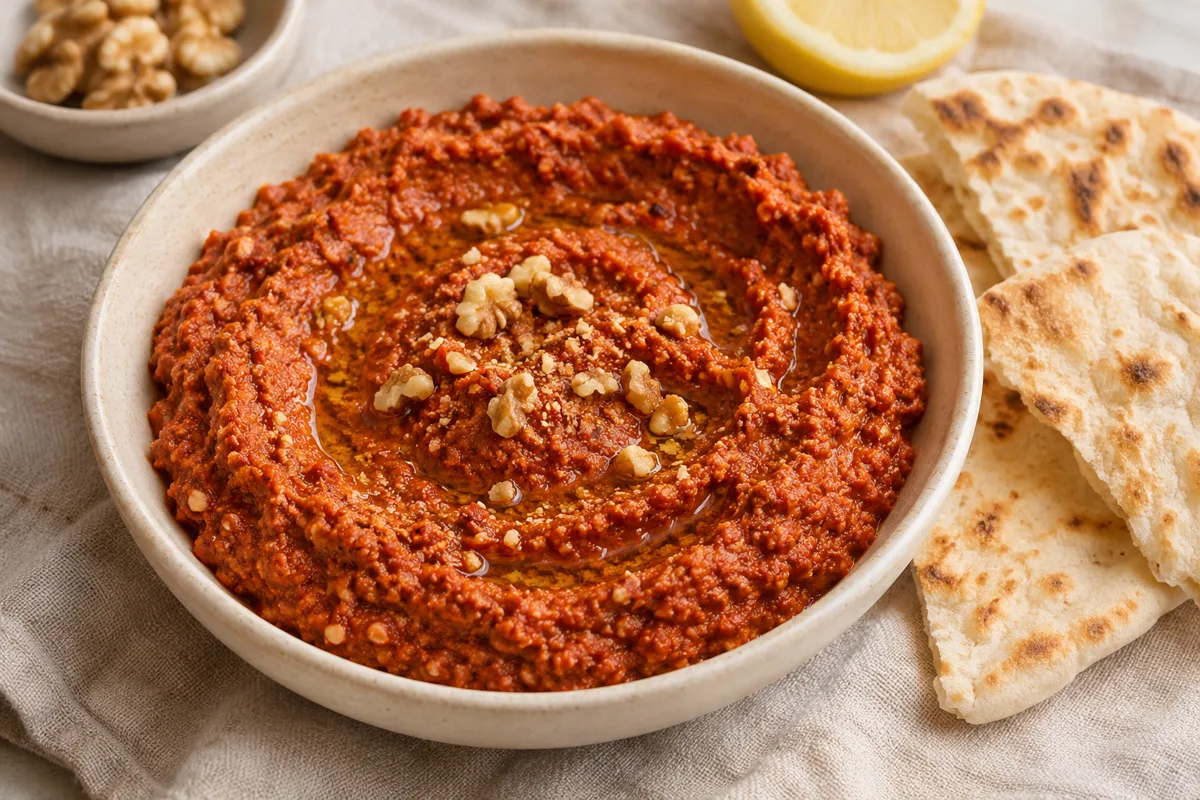
Serving illustration; presentation may vary.
Roasted peppers bring sweetness, walnuts provide body, and pomegranate molasses gives this dip a pleasantly sharp finish. Muhammara is especially useful when you want a spread with more texture than a smooth purée. It can sit beside warm bread and vegetables, become part of a sharing platter, or add a generous spoonful of flavour to a simple lunch.
This version uses fresh red peppers roasted at home, then drained before blending. That extra draining step matters: a pepper can look dry on the outside while carrying enough liquid inside to loosen the entire bowl. The finished dip should hold a spoon mark while remaining soft enough to scoop without tearing bread.
The method is straightforward, but its success depends on balancing sweet peppers, slightly bitter walnuts, acidity and chilli. You can adjust that balance at the end rather than committing to a very hot or very sour dip at the start. This is a home-style formulation, with a medium-coarse texture and measured seasoning that leaves room for differences between ingredients.
Roasted Red Pepper and Walnut Muhammara
Recipe at a glance
Makes about 550–650 g, or 8 appetizer servings. Preparation: 20 minutes. Cooking: 35 minutes. Resting and cooling: about 35 minutes. Total: about 90 minutes. Difficulty: easy. Equipment: large baking tray, bowl, sieve, dry frying pan and food processor. Roasting and cooling times vary with pepper size.
Ingredients
- 3 large red bell peppers, about 650–700 g before trimming
- 100 g walnut halves, about 1 cup
- 40 g plain dry breadcrumbs, approximately 1/3 cup, plus up to 10 g if needed
- 2 tablespoons extra-virgin olive oil, plus 1 teaspoon for serving
- 1 tablespoon pomegranate molasses, plus more to taste
- 1 tablespoon fresh lemon juice, plus more to taste
- 1 small garlic clove, finely grated
- 1 teaspoon ground cumin
- 1/2 teaspoon sweet paprika
- 1/4 teaspoon mild chilli flakes, or less for a gentler dip
- 1/2 teaspoon fine salt, then adjust to taste
- 1 tablespoon chopped walnuts for serving, optional
Use unsweetened, unseasoned breadcrumbs so they absorb moisture without introducing unexpected flavours. Pomegranate molasses should taste distinctly tart as well as sweet; brands vary considerably. A very sweet syrup may need a little more lemon juice. The quantity of salt is a starting point, particularly when using salted nuts or prepared breadcrumbs.
Step-by-step method
- Heat the oven to 220°C/425°F conventional, or 200°C fan. Line a large tray with baking parchment suitable for that temperature. Halve the peppers, remove their stalks, seeds and white ribs, and place them cut-side down in a single layer.
- Roast for 30–35 minutes, until the skins are blistered and dark in patches and the flesh has softened. Rotate the tray if one side colours faster. The peppers need tender flesh rather than uniformly blackened skins.
- Transfer the hot peppers to a heatproof bowl and cover with a plate for 10 minutes. Let them become cool enough to handle, then peel away the loosened skins. Avoid rinsing them under water, which washes away flavour and adds moisture.
- Put the peeled peppers in a sieve over a bowl for 10 minutes. Reserve the drained juices briefly in case the finished dip needs loosening. You should have approximately 350–400 g drained pepper flesh; if your peppers yield much less, start with fewer breadcrumbs.
- Meanwhile, toast the walnuts in a dry frying pan over medium-low heat for 4–6 minutes, stirring often. Stop when fragrant and lightly coloured. Tip them onto a plate immediately and let them cool so their residual heat does not continue to darken them.
- Pulse the cooled walnuts and breadcrumbs in a food processor until roughly crumbed. Add the peppers, olive oil, pomegranate molasses, lemon juice, garlic, cumin, paprika, chilli and salt. Pulse in short bursts, scraping down the bowl between bursts.
- Stop when the mixture is cohesive but still has small pieces of walnut. Taste a small spoonful. Add lemon juice a teaspoon at a time if it needs brightness, or a little more molasses if the tart sweetness is too faint. Do not adjust all the seasonings simultaneously.
- If the dip runs off a spoon, pulse in an additional tablespoon of breadcrumbs and leave it for five minutes before reassessing. If it is too stiff, add a teaspoon of reserved pepper juice or water. Transfer to a serving bowl, rest for 15 minutes, and finish with the optional oil and walnuts.
Choosing and roasting the peppers
Firm, heavy peppers generally provide more usable flesh than thin, wrinkled ones. Choose fully red peppers for a sweeter result. Green peppers change both colour and flavour, making the dip less sweet and more vegetal. There is no need to oil the skins before roasting because they will be removed.
Keep the peppers in one layer. Overlapping pieces trap steam and can soften without developing the roasted character that makes this recipe distinctive. If your tray is small, use two trays and exchange their positions halfway through cooking. Check the pieces individually rather than waiting for every pepper half to look identical.
A jarred-pepper shortcut is possible, but it needs different handling. Substitute 350–400 g roasted peppers after draining, then pat them dry. Taste before adding lemon because peppers packed in vinegar may already be sharp. Choose plain roasted peppers rather than peppers marinated with herbs or sugar, and keep the rest of the ingredient list unchanged initially.
Getting a coarse, scoopable texture
A food processor gives useful control because short pulses leave small walnut pieces. A powerful blender tends to make a smoother, denser paste and may need more liquid to circulate. If a blender is your only option, process small batches and scrape frequently rather than pouring in extra oil simply to make the blades turn.
Breadcrumbs absorb moisture gradually. A dip that seems loose immediately after processing may thicken during its rest. Adding too many crumbs at once can make it taste bready and mute the peppers. Work in small additions and allow time between them. Extra walnuts thicken too, but they also change the flavour more noticeably.
For a hand-chopped version, mince the peeled peppers finely with a knife, crush the toasted walnuts in a mortar, and stir everything together in a bowl. The result will be more rustic and slightly less uniform. It is still useful as a spread, especially when you enjoy distinct pieces rather than a smooth dip.
Balancing the flavour
Taste after the dip has rested, because raw garlic becomes more noticeable and breadcrumbs soften into the mixture. If the dip tastes flat, try a small pinch of salt before adding more spice. If it tastes heavy, lemon may help more than oil. If the walnuts taste burnt, however, seasoning will not repair them; begin again with fresh nuts.
Chilli strength varies. Mild flakes contribute warmth, while a hot crushed chilli can dominate the same measured quantity. For guests with different preferences, keep the base mild and offer additional chilli separately. Smoked paprika is another variation, but use only a small amount so it does not overwhelm the roasted pepper flavour.
Pomegranate molasses has a distinct role here. A simple combination of honey and lemon can produce a pleasant pepper dip, but it will not reproduce the same flavour, and honey makes the recipe unsuitable for a vegan menu. If molasses is unavailable, describe the substitution honestly rather than calling the result identical.
Serving ideas and useful pairings
Spread the dip in a shallow bowl and draw a few ridges across the top with the back of a spoon. A small drizzle of olive oil catches in the ridges; there is no need for a deep pool. Serve with bread pieces, crisp cucumber, carrot sticks or warm roasted vegetables, keeping garnishes simple enough that guests can see what they are eating.
For a varied sharing plate, pair it with the site’s cucumber and dill tzatziki. The cool yogurt sauce contrasts with the sweeter pepper dip. Homemade Moroccan khobz is another useful accompaniment; slice or tear it into manageable pieces just before serving.
For lunch, spread a modest layer inside a sandwich with grilled vegetables. It also works under roasted cauliflower or beside cooked lentils. Keep it thick when using it as a sandwich spread so moisture does not soak through the bread. Add leafy salad immediately before eating rather than storing it against the dip overnight.
Allergens, substitutions and storage
This recipe contains walnuts and wheat in standard breadcrumbs. It is not suitable for someone with a walnut allergy; replacing walnuts changes the recipe and does not automatically make it safe for other nut allergies. For a wheat-free adaptation, use suitable certified breadcrumbs and check every packaged ingredient. Cross-contact and individual product labels still matter.
Refrigerate promptly in a clean covered container at 4°C/40°F or below and use within three days. For a party, put out a small bowl and replenish it from the refrigerator. Do not leave a perishable dip out longer than two hours, or one hour in temperatures above 32°C/90°F. Use a clean serving utensil rather than dipping used cutlery into the storage container.
For longer storage, freeze small portions for up to one month for best texture. Thaw in the refrigerator and stir well; some separation is normal. Add a few fresh drops of lemon after thawing if needed. Freezing does not make food that was mishandled beforehand safe. No nutrition figures are supplied because the exact products and final yield have not been analysed.
Frequently asked questions
Can I make it the day before? Yes. Refrigerate it covered and reassess seasoning before serving. Keep the finishing oil and chopped walnut garnish separate until you arrange the bowl.
Why does it taste bitter? Over-toasted nuts, scorched pepper flesh or an especially bitter olive oil can contribute. Taste the individual ingredients first; extra sweetener may hide but will not remove a burnt flavour.
Do I need to remove every piece of pepper skin? Remove most of it, particularly blackened or tough areas. A tiny soft fragment will not ruin the dip, but large strips interfere with the texture.
Can I leave out garlic? Yes. The dip will be milder, and its pepper-walnut balance still works. Do not compensate automatically with a much larger quantity of cumin.
Is this served hot? Serve it cool or briefly tempered for flavour, while following the storage limits above. It does not need cooking after blending.
Finish with texture, then adjust gently
Drain the peppers, toast the walnuts carefully and pulse rather than puréeing continuously. Those three decisions do most of the work. A final taste for salt, lemon and pomegranate gives you a balanced bowl without burying the roasted ingredients under extra seasoning.