
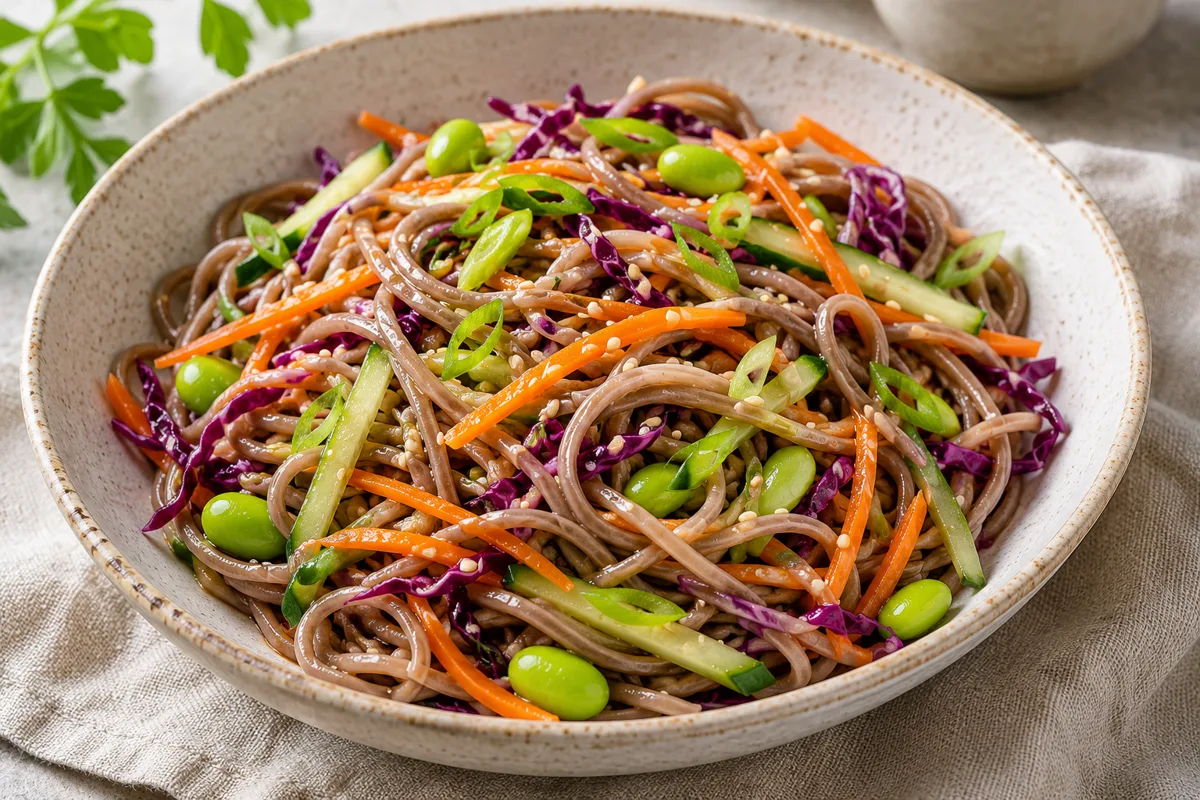
Serving illustration; presentation may vary.
A good noodle salad needs more than a dressing poured over cold noodles. The noodles should stay separate, the vegetables should retain their crunch, and the seasoning should reach every strand without pooling at the bottom of the bowl. This sesame ginger soba salad builds those qualities with a short ingredient list and a practical order of preparation.
Soba contributes a nutty flavour and a more delicate texture than many wheat noodles. Cucumber, carrot and red cabbage add freshness, while edamame gives the bowl a more substantial bite. The dressing combines soy sauce, rice vinegar, fresh ginger and a small amount of toasted sesame oil. It coats rather than saturates the noodles.
This is a flexible home-style salad rather than a claim to a single traditional Japanese preparation. It suits a light lunch, a side dish or a packed meal when kept chilled. Most of the work happens before the noodles touch the water, so read through the short cooking section and have the colander ready before you begin.
Sesame Ginger Soba Noodle Salad with Crunchy Vegetables
Recipe at a glance
Serves 4 as a light main or 6 as a side. Preparation: 25 minutes. Cooking: approximately 10 minutes, depending on the noodles and edamame. Total: about 35 minutes. Difficulty: easy. You need a large saucepan, a colander with small enough holes to retain noodles, a mixing bowl and a sharp knife or vegetable peeler.
Ingredients
For the salad
- 250 g dried soba noodles, about 9 oz
- 150 g frozen shelled edamame, about 1 cup
- 1 medium cucumber, about 250 g
- 1 medium carrot, about 100 g
- 120 g red cabbage, about 2 cups finely shredded
- 3 spring onions, thinly sliced
- 1 tablespoon sesame seeds
- 2 tablespoons chopped coriander or flat-leaf parsley, optional
For the dressing
- 3 tablespoons reduced-salt soy sauce
- 2 tablespoons unseasoned rice vinegar
- 1 tablespoon toasted sesame oil
- 1 tablespoon neutral oil
- 2 teaspoons maple syrup or sugar
- 2 teaspoons finely grated fresh ginger
- 1 small garlic clove, finely grated
- 1 tablespoon water, plus another tablespoon only if needed
- 1/4 teaspoon chilli flakes, optional
Use unseasoned rice vinegar; seasoned versions already contain sugar and salt. If using standard soy sauce, start with two tablespoons and adjust after tossing. Toasted sesame oil is concentrated, so do not substitute it tablespoon for tablespoon for all the neutral oil as well. A neutral oil keeps the dressing from becoming overpowering.
Step-by-step method
- Whisk together the soy sauce, vinegar, sesame oil, neutral oil, maple syrup or sugar, ginger, garlic, water and optional chilli in a large bowl. Stir until any sugar dissolves. Taste: it should be tangy and savoury, with enough sweetness to soften the vinegar rather than make a sweet sauce.
- Cook the frozen edamame according to its packet instructions. Do not assume that thawing alone is sufficient. Drain, cool promptly under cold running water and drain again. Keep it in a separate bowl while preparing the vegetables.
- Halve the cucumber lengthways. If its centre is very watery, scoop out the soft seeds with a spoon. Cut the firm flesh into thin matchsticks. Peel the carrot into ribbons or cut fine matchsticks. Shred the cabbage thinly so it bends around the noodles rather than remaining in bulky pieces.
- Bring a large saucepan of water to a rolling boil. Add the soba and stir gently to separate the strands. Follow the packet’s cooking time, usually only a few minutes, and begin tasting shortly before that time ends. Keep the boil controlled so foam does not spill over.
- When the noodles are tender but not mushy, drain immediately. Rinse thoroughly under cold running water, gently lifting and turning the strands to wash away surface starch. Let the water run through the whole bundle rather than just over its top.
- Drain very well for two to three minutes, shaking the colander gently. Do not wring or squeeze the noodles. A wet bundle dilutes the dressing, while a heavily compressed bundle breaks and clumps.
- Add the noodles to the dressing and use two forks or clean hands to lift and turn them carefully. Add the vegetables, edamame and spring onions, reserving a little for the top. Toss again until the ingredients are evenly distributed.
- Taste a forkful containing both noodles and vegetables. Add a small splash of vinegar if dull, a little water if overly salty, or a few drops of sesame oil if the sesame flavour is faint. Finish with sesame seeds and optional herbs. Serve promptly or refrigerate in covered containers.
Understanding the noodle packet
Soba products vary. Some contain a substantial proportion of wheat flour, while others use only buckwheat. The cooking time, texture and tendency to break can differ considerably. The packet is a better starting point than a universal time printed in a recipe. Check the ingredient label as well as the front of the package.
One hundred percent buckwheat noodles can be fragile, especially after cooking. Lift them with a broad utensil instead of stirring vigorously. If you are new to soba, cook a small portion first so you know how quickly that particular brand becomes tender. Overcooked noodles cannot be made firm again by chilling them.
Rinsing is part of the method for this cold salad. It removes surface starch and stops cooking, helping the strands remain separate. That does not mean every noodle recipe needs rinsing: a hot pasta dish may rely on its starch for a sauce. Here the dressing is prepared separately and the intended texture is cool and loose.
Preparing vegetables that stay crisp
Thin, consistent cuts make the salad easier to eat. Very long ribbons tangle with the noodles and can be awkward to lift. Cut carrot ribbons into shorter lengths before adding them, and remove any tough cabbage core. If your knife cannot slice cabbage finely, a peeler can help, used carefully on a stable piece.
Watery cucumber can dilute a prepared salad over time. Removing the soft centre reduces that problem without salting the entire cucumber. Salting would draw out more water but would also add seasoning that is harder to measure alongside soy sauce. For advance preparation, keep cucumber separate and fold it in shortly before serving.
Spring onion is strongest in its white part. Use less if you prefer a milder salad, or rinse the sliced onion briefly and drain it well. Herbs are optional because their flavour changes the overall direction. Coriander gives a pronounced fresh note; parsley offers a gentler alternative. Add either after the noodles have cooled completely.
Dressing balance and common fixes
Taste the dressing on food, not only from a spoon. A concentrated dressing may seem too strong by itself but become balanced after coating 250 g of dried noodles and a generous quantity of vegetables. Conversely, dressing that tastes perfectly mild alone may disappear once diluted across the bowl.
If the finished salad is too salty, add a little more plain cooked noodle or vegetables if available. Water can loosen concentrated dressing, but too much leaves a puddle. Avoid adding sugar automatically: sweetness may mask salt without correcting the amount. For extra acidity, begin with a teaspoon of vinegar and toss thoroughly before adding more.
If the salad tastes oily, check whether the noodles were still wet when tossed. Oil and watery dressing may collect separately rather than cling evenly. Lift the noodles into a clean bowl, leaving excess liquid behind, then reassess. Next time, drain more thoroughly and keep the measured oils rather than pouring freely from the bottle.
Variations that preserve the method
Use thawed and properly cooked peas instead of edamame if you prefer, following their cooking instructions. Thinly sliced radishes can replace part of the cabbage, and small cooked broccoli florets can add variety. Keep the total vegetable quantity similar so the dressing remains sufficient.
For a more substantial meal, add separately cooked tofu cubes. Pat them dry before cooking and let them cool before combining with a chilled salad. The salad already has sesame and soy flavours, so a simple tofu preparation is often better than another heavily salted sauce. Cool cooked tofu promptly and refrigerate before combining it with a chilled salad.
If soba is unavailable, use another noodle with its own cooking and cooling instructions. Wheat spaghetti produces a different texture, while rice noodles may need soaking rather than boiling. Do not reuse soba timings for a substitute. Describe the result as a noodle-salad variation rather than implying the noodles are interchangeable in every respect.
Serving and preparing ahead
Serve in shallow bowls so the vegetables do not all disappear underneath a mound of noodles. Twirl or lift a small portion at a time when plating, then scatter the reserved vegetables on top. Sesame seeds are a garnish, not a thick crust; a measured tablespoon is enough for the whole bowl.
For a menu, accompany the salad with a simple cooked vegetable or soup rather than several more strongly dressed dishes. Explore our Lunch collection for more meal ideas or our Japanese collection for regional inspiration.
For meal preparation, store the dressing, noodles and vegetables separately when practical. Toss the noodles with a teaspoon of the measured dressing to discourage sticking, then refrigerate promptly. Combine shortly before eating. This keeps cucumber crisper and prevents cabbage colour from spreading as much through the noodles overnight.
Storage, transport and allergens
Refrigerate promptly at 4°C/40°F or below in a covered container and use within two days for best texture. Keep packed lunches cold with an insulated bag and ice pack. Follow the usual two-hour limit for perishable food outside refrigeration, reduced to one hour above 32°C/90°F. Do not judge safety from smell alone.
Freezing the assembled salad is not recommended because cucumber softens and noodle texture deteriorates. This salad is designed to be eaten cold, so there is no reheating step. If you prefer warm noodles, make a separate warm preparation and add crisp vegetables at serving rather than repeatedly warming and chilling the same batch.
Contains soy and sesame. Many soba noodles and soy sauces also contain wheat. Buckwheat itself is different from wheat, but that does not make every soba product gluten-free or suitable for everyone. For a gluten-free adaptation, select certified products for both noodles and sauce, and check cross-contact warnings. No nutritional totals are asserted here.
Frequently asked questions
Why do my noodles stick together? They may be overcooked, insufficiently rinsed or left in a compressed wet pile. Rinse gently and toss promptly after draining.
Can I leave out garlic? Yes. Ginger, vinegar and sesame still give the dressing character. Reduce ginger too if you prefer very mild seasoning.
Can I use tahini instead of sesame oil? Tahini makes a creamier sauce and needs more water. It is a different dressing, so start with a small separate batch rather than replacing the oil blindly.
Is the salad vegan? It can be when the selected noodles and packaged ingredients contain no animal-derived ingredients. Check the labels rather than relying only on the recipe title.
A simple order makes the difference
Prepare the dressing and vegetables first, then cook, rinse and drain the soba carefully. Toss gently and taste a complete forkful before adjusting. The result should feel light, crisp and evenly seasoned rather than wet or heavily coated.