
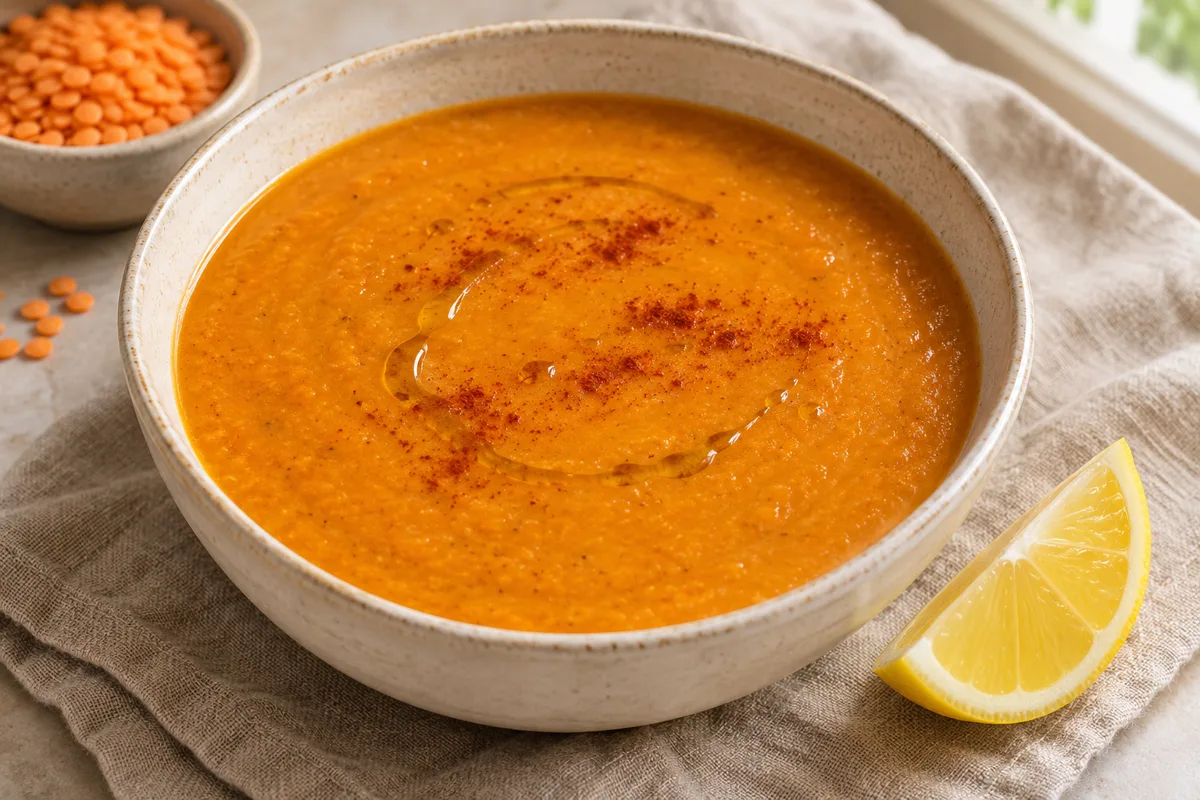
Serving illustration; presentation may vary.
Red lentils are useful when you want a soup that becomes creamy without cream. They soften quickly, break down as they simmer and blend into a comforting bowl with little effort. Carrot adds a gentle sweetness, tomato paste gives depth, and lemon added at the end keeps the result from tasting heavy.
This version uses a straightforward combination of onion, carrot, garlic and cumin. A small paprika oil is optional, but it gives each serving a warmer aroma and a little contrast on the surface. The soup can remain lightly textured or be blended smooth, depending on the equipment you have and the finish you prefer.
The main technique is managing the liquid. Red lentils absorb stock and continue thickening as they stand, so a soup that looks right in the pan may become much thicker by lunchtime. Start with the measured stock, keep additional hot water available and make the final adjustment just before serving rather than guessing at the beginning.
Red Lentil Soup with Lemon and Cumin
Recipe at a glance
Serves 4 generous portions. Preparation: 15 minutes. Cooking: about 40 minutes. Total: about 55 minutes. Difficulty: easy. Equipment: a large heavy saucepan, sieve, chopping board and optional immersion blender. Timings assume split red lentils, which do not need a long soak; other lentil varieties need a different method.
Ingredients
For the soup
- 250 g split red lentils, about 1 1/4 cups
- 2 tablespoons olive oil
- 1 medium onion, about 150 g, finely diced
- 1 medium carrot, about 120 g, cut into small dice
- 2 garlic cloves, finely chopped
- 1 tablespoon tomato paste
- 1 1/2 teaspoons ground cumin
- 1/2 teaspoon sweet paprika
- 1 litre reduced-salt vegetable stock, about 4 1/4 US cups
- 250–400 ml hot water, approximately 1–1 2/3 cups, added as needed
- 1/4 teaspoon ground black pepper
- 1/4 teaspoon fine salt initially, plus more only after tasting the stock
- 2 tablespoons fresh lemon juice, plus more to taste
- Lemon wedges for serving, optional
Optional paprika oil
- 1 tablespoon olive oil
- 1/2 teaspoon sweet paprika
- A small pinch of chilli flakes, optional
Check the stock label before adding salt. Some reduced-salt products are still strongly seasoned, while others are mild. Tomato paste also varies in concentration. Use plain paste rather than a prepared pasta sauce, which brings additional herbs, sugar and salt that can obscure the intended flavour.
Step-by-step method
- Spread the lentils on a plate briefly to check for debris, then rinse them in a fine sieve under cold water. Let them drain while you prepare the vegetables. A little cloudy rinse water is normal; there is no need to keep washing indefinitely until it runs perfectly clear.
- Heat the two tablespoons olive oil in a large saucepan over medium heat. Add onion and carrot with the initial small pinch of salt. Cook for 7–8 minutes, stirring regularly, until the onion softens and looks translucent. Reduce the heat if the edges begin browning quickly.
- Add garlic and cook for 30 seconds. Stir in tomato paste, cumin and paprika. Cook for another minute, stirring continuously so the spices become fragrant without scorching against the bottom. Add a spoonful of stock if the mixture catches.
- Add the drained lentils and the litre of stock. Stir well, scraping the base of the pan. Bring to a gentle boil, then reduce to a steady simmer. Skim off excessive foam if needed, without removing large quantities of liquid.
- Simmer with the lid partly covering the pan for 20–25 minutes, stirring every few minutes. Check the bottom more frequently as the soup thickens. Add hot water in small amounts if the mixture becomes too thick before the lentils soften. The lentils should collapse easily when pressed with a spoon.
- Remove from the heat. For a smoother soup, blend with an immersion blender while keeping the blade fully submerged and taking care to avoid splashes. For a rustic texture, whisk vigorously or mash with a potato masher, then stir until the vegetables and lentils are evenly distributed.
- Add the lemon juice and black pepper. Adjust thickness with enough of the remaining hot water to create a soup that pours from a ladle. Taste and add salt only if needed. Return to gentle heat briefly if necessary, stirring so it does not stick.
- For the optional finishing oil, warm its tablespoon of olive oil over low heat in a small pan. Remove from the heat, stir in paprika and optional chilli, and swirl for several seconds. Do not let the paprika blacken. Ladle soup into bowls and add a small drizzle of the oil, with lemon wedges alongside.
Choosing lentils for this method
Split red lentils are often orange or salmon-coloured when dry and turn a softer golden orange after cooking. They lose their shape readily, which suits a blended soup. Whole brown or green lentils behave differently and are not a direct substitute for the stated cooking time or finished texture.
Older lentils can take longer to soften. If yours remain firm, continue simmering gently and add water as needed rather than increasing the heat sharply. A vigorous boil can reduce the liquid before the lentils are tender, leaving a thick mixture that catches on the bottom. Test several lentils rather than only one from the surface.
Building flavour without making the soup heavy
Softening onion and carrot before adding liquid gives a rounder base than boiling everything together from the start. The goal is gentle cooking, not deep caramelisation. Browned onions are delicious in other soups, but a heavily browned base changes both the colour and sweetness of this one.
Tomato paste needs a brief spell in the oil to lose some of its raw character. Cumin and paprika become fragrant quickly, so keep them moving and have the stock ready. If they burn, they can make the soup bitter. More lemon or sugar will not remove that burnt note, so prevent it with moderate heat.
Lemon belongs near the end in this formulation. Adding it after the lentils soften gives you better control over brightness and avoids committing to one acidity level before the stock reduces. Start with two tablespoons for the full pot, then taste. Offer wedges separately for people who prefer a sharper bowl.
A safe, controlled approach to blending
An immersion blender is convenient because the soup stays in the pan. Turn off the heat and move the pan to a stable surface if necessary. Keep the blade below the liquid before switching on, then move slowly. Lifting a running blade above the surface can throw hot soup out of the pan.
If using a countertop blender, follow its manufacturer’s instructions for hot liquids. Allow soup to cool as required, blend small batches, vent appropriately and never seal hot liquid into a closed blending cup. Some machines are not suitable for hot soup at all. Check before using rather than assuming every blender works the same way.
Adjusting thickness at different stages
The starting litre of stock is intended to cook the lentils, not guarantee the final serving consistency. Evaporation depends on the pan’s diameter, lid position and heat. A wide pan loses more liquid than a narrow deep one. Add water by small measured splashes and note how much your pan typically needs.
If the soup is too thick, stir in hot water a little at a time before checking seasoning again. Dilution reduces salt and spice intensity, so do not make all the seasoning adjustments until the texture is right. A ladleful should flow rather than fall as a solid mound, while still coating the spoon lightly.
If the soup is too thin, simmer gently uncovered for a few minutes, stirring often. Remember that it will thicken as it cools, so avoid reducing it to a paste. Adding a large spoonful of dry lentils at the end is not a quick fix: they need time and liquid to cook through properly.
Variations that make sense
A spoonful of plain yogurt at serving is optional if dairy suits your menu. Add it to individual bowls rather than stirring it into the whole boiling pot, where it may separate. For a plant-based finish, keep the paprika oil and use vegetable stock with suitable ingredients. Check stock carefully; not every product labelled simply as broth is vegetarian.
Serving ideas and preparing ahead
Serve in warm bowls with the finishing oil added at the table. A little oil carries the paprika aroma; too much forms a greasy layer that hides the soup underneath. Add only a few drops initially and let guests choose more if they wish. Fresh lemon wedges provide an easy adjustment without changing the full pot.
The site’s homemade Moroccan khobz is a useful accompaniment for dipping. A simple cucumber or tomato salad can provide a cool contrast. Browse our Lunch collection for more everyday meal ideas.
For advance preparation, make the soup without the finishing oil and prepare that separately shortly before serving. Refrigerated soup will be thicker. Measure a splash of water into the saucepan when reheating, then add more only after stirring and warming; cold thick soup can look as though it needs more liquid than it eventually does.
Storage, freezing and reheating
Refrigerate promptly in shallow containers at 4°C/40°F or below and use within three days. Do not leave a large pot at room temperature waiting for it to cool completely. Divide it into smaller portions so heat can escape more efficiently, and keep within the usual two-hour limit, or one hour in temperatures above 32°C/90°F.
Freeze cooled portions in suitable containers with expansion space for up to two months for best quality. Label them with the date and thaw in the refrigerator. The soup may separate slightly after thawing; stirring during reheating usually restores its consistency. Freezing is a storage option, not a way to rescue food left out too long.
Reheat gently on the hob, stirring frequently and adding water as needed, until the soup reaches 74°C/165°F throughout. In a microwave, use a suitable vented container, stir partway through and check the temperature in several places. Warm only the portions needed, and use a clean ladle for serving to reduce contamination of stored leftovers.
Allergens and nutrition
Lentils are the main ingredient, but the stock may contain celery, wheat, soy or other declared allergens. Read its label and check all packaged spices. The base recipe contains no dairy ingredient, but yogurt garnish introduces milk. No exact nutrition calculation has been performed; do not label the soup as a medical diet or attach unverified calorie or protein totals.
Frequently asked questions
Why did my orange lentils turn yellow? Their colour changes during cooking and is also influenced by stock, carrot and tomato paste. A softer golden colour does not by itself indicate a problem.
Can I omit tomato paste? Yes, but the soup will have less depth and a paler colour. Taste before increasing any other ingredient automatically.
Can I double the recipe? Use a sufficiently large pot, keep stirring and allow extra time for the larger quantity to reach a simmer. Divide leftovers into shallow containers rather than cooling the full doubled pot on the counter.
Do I need the finishing oil? No. The soup is complete without it. It adds aroma and appearance rather than providing essential cooking liquid.
Finish with lemon and the right consistency
Cook the lentils until they collapse easily, blend only as smooth as you like, and adjust water before the final seasoning. A fresh squeeze of lemon gives the soup a clear finish. The method stays simple while leaving enough control to suit your stock, pan and preferred texture.